
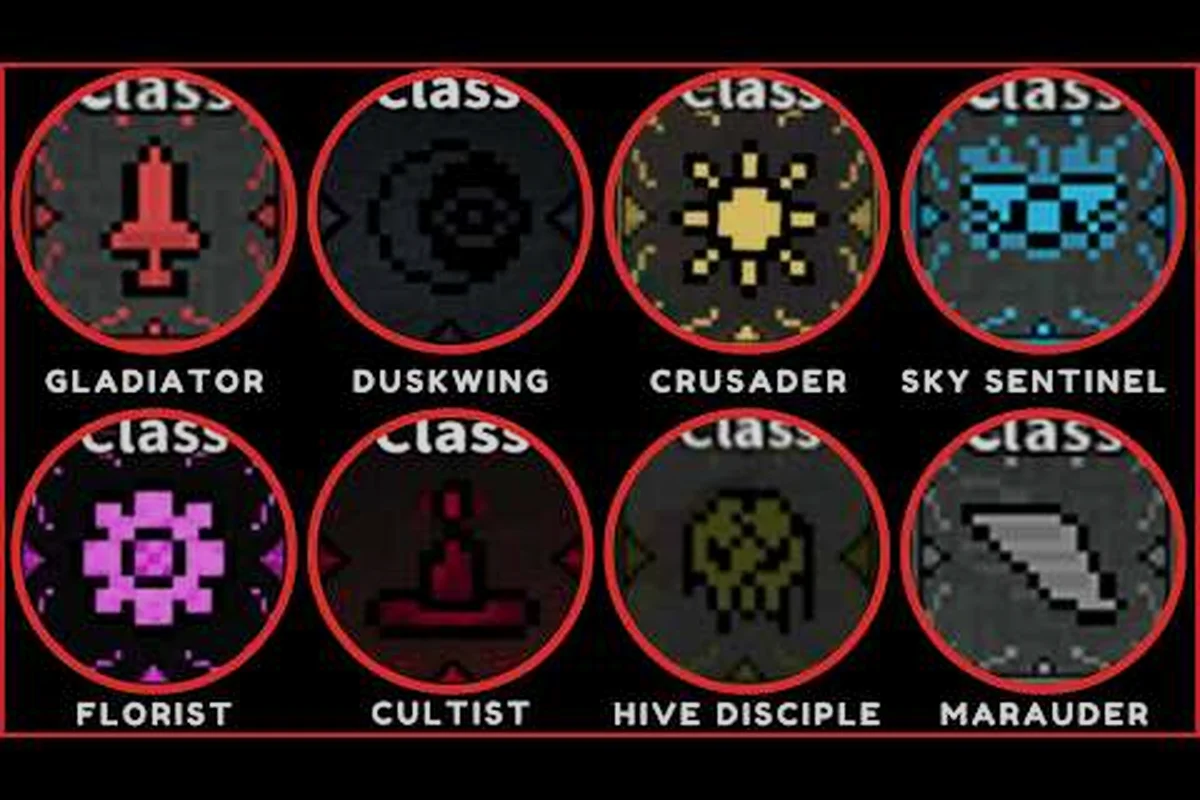
The Veil Cultist class is the dedicated sustain-DPS option among the eight base classes, built around damage-over-time, self-healing, and AoE pressure that rewards players who stay in extended fights rather than burst down targets. According to the official The Veil page on Roblox, the game ships eight base classes plus hybrid combinations, and Cultist sits at the sustain pillar of that roster. If you want a class that scales into late-game The Maze and The Pale instead of falling off after the early burst meta, the cultist identity is worth learning in depth before you spend your first Sins.
What Defines the Cultist Playstyle
The cultist identity is built on three pillars that interact with each other: Damage over Time stacking, Lifesteal from sustained combat, and Sacrifice mechanics that convert health or resources into amplified damage. Compared to the burst-oriented Nightshade or the mobility-first Marauder, the cultist wants to drag fights out, stack multiple DoT effects on a target, and out-heal incoming damage while the enemy slowly collapses. The class also leans into the horror-RPG atmosphere more than any other base option, which shows up in ability names, visual effects, and the way The Veil's Sanity bar interacts with sustained damage.
Core Stat Affinity
Every class in The Veil has a hidden stat affinity that determines how efficiently it converts gear and levels into damage, healing, or utility. The cultist affinity skews toward Willpower and Spirit scaling, which means gear with Willpower affixes and Spirit-enchanted weapons will outperform raw Strength pieces for a cultist build. The full stat breakdown across all eight classes is covered in the class stats overview, but for cultist players the practical rule is: prioritize Willpower on armor and Spirit on weapons, then layer sustain affixes on top through the Enchanter.
| Stat | Cultist Priority | Why It Matters |
|---|---|---|
| Willpower | Highest | Scales DoT duration and damage; powers Sacrifice effects |
| Spirit | High | Boosts lifesteal conversion and shield generation |
| Vitality | Medium | Larger health pool gives Sacrifice more room to operate |
| Strength | Low | Most cultist abilities scale with Willpower, not Strength |
| Agility | Low | Cultist is a mid-mobility class; Agility is a secondary stat |
Sins and Offerings Cost Structure
Every ability in The Veil's class trees is purchased with two layered currencies. Sins are the common ability-point currency, earned steadily by killing mobs in The Maze and completing story content. Offerings are the rarer gating currency that unlocks the higher tiers of each ability tree, dropped by bosses and from high-rarity chests. The class abilities page documents this two-currency system in detail, but the practical takeaway for cultist players is that Offerings, not Sins, are your long-run bottleneck.
| Currency | Source | Cultist Spending Priority |
|---|---|---|
| Sins | Maze mob kills, story progression | Spend across the DoT and Lifesteal branches first |
| Offerings | Boss kills, Mythic chests, weekly resets | Gate the Sacrifice capstone and tier-4 ability nodes |
| Ichor | Blacksmith upgrades | Invest in your main weapon before pushing higher ability tiers |
| Fire Essence | Enchanter affixes | Reserve for sustain affixes on armor after abilities are bought |
Cultist Ability Tree Breakdown
The cultist ability tree divides into four primary branches that each reward a different sustained-fight scenario. Unlike the linear path of the Sky Sentinel, the cultist tree is built for branching investment, and most players will spend their first 30 to 40 ability points across two branches before committing the rest. According to community testing summarized in the class abilities and costs video walkthrough, the DoT and Lifesteal branches are the most efficient early investments, while Sacrifice and AoE branches scale harder but require more Sins to feel complete.
DoT Branch: Damage Over Time Stacking
The DoT Branch is the cultist's signature tree and the one most players enter first. The branch opens with a basic DoT application on a primary attack and branches into three mid-tier effects: a Bleed type DoT that scales with weapon damage, a Decay type DoT that scales with Willpower, and a Soul Burn type DoT that interacts with the Sanity bar. The end-cap ability in this branch applies all three DoT types simultaneously, which is the cornerstone of any pure-DoT cultist build. Because each DoT ticks independently, stacking all three on a single target multiplies your effective damage output without requiring burst windows.
Lifesteal Branch: Sustained Healing in Combat
The Lifesteal Branch converts a percentage of damage dealt into healing, with higher tiers unlocking lifesteal on AoE and on DoT ticks specifically. This is the branch that makes cultist feel immortal in The Maze, where endless mob spawns give the lifesteal passive something to chew on. Pairing the Lifesteal cap with the DoT cap is the classic sustain build, because each DoT tick counts as a separate damage event for lifesteal purposes, so stacking three DoT types on a boss effectively triples your lifesteal rate.
Sacrifice Branch: High-Risk High-Reward Conversion
The Sacrifice Branch lets the cultist spend health or Sanity for amplified damage, larger shields, or instant-cast DoT refreshes. The branch is gated behind Offerings more than Sins, so most players will not access the full Sacrifice cap until late story progression. The trade-off is real: a full Sacrifice rotation can one-shot story bosses, but a mistimed Sacrifice against a tough Maze elite will leave you at 10% health with no recovery window.
AoE Branch: Maze Crowd Control
The AoE Branch turns the cultist into a Maze specialist by spreading DoT effects to nearby targets and adding lifesteal on multi-kills. This branch is weaker in single-target boss fights but extremely strong in The Maze, where mob density rewards the cultist's area pressure. Hybrid players who plan to pair cultist with a melee or burst class will often skip this branch in favor of the Marauder or Nightshade's native AoE options.
Sins Cost by Ability Tier
The Veil's ability nodes scale in cost at each tier, and cultist players who understand the cost curve can plan their Sins spending more efficiently than players who spend reactively. The table below reflects community-reported costs, since the game does not publish an official per-node price list. Exact figures may shift with future balance patches, but the relative tier ratios are stable.
| Ability Tier | Approximate Sins Cost | Approximate Offering Cost | Typical Unlock Window |
|---|---|---|---|
| Tier 1 (basic) | 50-100 | 0 | Available at level 1 |
| Tier 2 (intermediate) | 200-400 | 0 | Story Act 1 clear |
| Tier 3 (advanced) | 600-1000 | 1-2 | First Offering drop, around Act 2 |
| Tier 4 (capstone) | 1500-2500 | 3-5 | Late Act 2 / Act 3 progress |
| Hybrid capstone | 3000+ | 5+ | Hybrid class unlocked, late endgame |
The takeaway from this cost curve is that the first 1000 Sins feel fast, and the next 2000 feel slow, because each tier roughly doubles in price. Players who try to spread points evenly across all four branches will find themselves unable to cap any branch before the late game, so the recommended approach is to cap two branches first, then spend leftover Sins on the remaining branches as a luxury.
Hybrid Class Pairings for Cultist
Hybrid classes in The Veil combine two base classes into a single character, gated behind a specific unlock condition that varies by pairing. The hybrid system is documented across the all classes overview and is the most popular late-game progression path because hybrids cap higher per-stat than base classes. Cultist is one of the most flexible hybrid parents because its sustain identity slots into almost any other class's weaknesses, but the strongest pairings follow a clear hierarchy based on community testing.
| Hybrid Pairing | Resulting Identity | Strength Tier (PvE) | Strength Tier (PvP) |
|---|---|---|---|
| Cultist + Marauder | Sustain bruiser with gap closer | A | A |
| Cultist + Nightshade | Burst-sustain assassin | A | S |
| Cultist + Crusader | Tank-sustain hybrid | A | B |
| Cultist + Sky Sentinel | Ranged kiter with self-heal | B | A |
| Cultist + Gladiator | Pure melee sustain | B | B |
| Cultist + Verdant | Hybrid healer-DoT | B | C |
| Cultist + Cyst Disciple | Full sustain DoT specialist | S (PvE) | C |
How to Get Hybrid Class Unlocks
The most common question new players ask is how to actually unlock a hybrid class, because the requirement is hidden behind a quest chain that does not appear in the main story journal. The basic steps, based on community research and verified across the hybrid classes walkthrough, are:
-
Reach level 30 on the parent class you want to hybridize. Cultist is a slow level because of its sustain playstyle, so most players unlock their first hybrid around the 15-20 hour mark.
-
Complete the Twilight Pact side quest, which begins by talking to the masked NPC near the Glade obelisk after the Act 2 story clear.
-
Defeat the Hybrid Trial boss at the end of the Twilight Pact chain. The boss rotates weekly and inherits abilities from both parent classes, so a Cultist + Marauder trial will play very differently from a Cultist + Nightshade trial.
-
Spend the Hybrid Seal dropped by the trial boss at the Class Anvil in the Glade hub. The anvil will then offer the hybrid class as a permanent unlock.
Best Cultist Hybrid Pairings Explained
The pairing table above ranks pairings by PvE and PvP performance, but the reasoning behind each top-tier pairing is what matters for build planning.
Cultist + Nightshade is the strongest PvP hybrid because the Nightshade's burst windows from the Nightshade class kit combine with the cultist's lifesteal to create a "burst, then heal back" loop that is brutal in open-world PvP against outlaws. The hybrid loses some of the Nightshade's pure mobility, but gains enough sustain to survive extended duels.
Cultist + Marauder is the most balanced hybrid, blending the Marauder's gap closers and mobility with the cultist's sustain to create a bruiser that can chase down targets, lock them in melee, and out-heal their burst. The Marauder class identity leans into high-risk aggression, and the cultist half of the hybrid provides the safety net that Marauder players normally lack.
Cultist + Crusader is the tank-sustain hybrid and the most forgiving option for solo players, because the Crusader's shields and aggro tools stack with the cultist's lifesteal to make the character nearly unkillable. The trade-off is lower damage ceiling compared to the Nightshade or Marauder pairings, which is why Crusader hybrids sit at A-tier in PvE and B-tier in PvP.
How Cultist Compares to Other Classes
The class roster in The Veil is built around five distinct identities: sustain (Cultist), burst (Nightshade), mobility (Marauder), tanking (Crusader), and ranged kiting (Sky Sentinel). Knowing where Cultist sits in that identity matrix helps you decide whether to commit to the class or pivot early. The class tier list community video breaks this down further, but the high-level comparison is:
| Class | Identity | Strength vs. Cultist | Weakness vs. Cultist |
|---|---|---|---|
| Nightshade | Burst assassin | Burst windows, single-target delete | Falls off if burst fails, no sustain |
| Marauder | Mobility bruiser | Gap closers, chase potential | Squishy without lifesteal |
| Crusader | Tank and support | Shields, aggro control, group utility | Lower sustained DPS |
| Sky Sentinel | Ranged kiter | Range advantage, zoning | Loses extended fights, no lifesteal |
| Gladiator | Starter melee | Forgiving kit for new players | Lower cap in endgame |
| Verdant | Hybrid healer | Group healing, buff utility | Squishy, reliant on party |
| Cyst Disciple | DoT specialist | DoT synergy with cultist hybrids | Narrower build options |
| Cultist | Sustain DPS | Self-sufficient, scales into endgame | Slow ramp, weak in short fights |
The honest take is that Cultist is the best class in The Veil for solo players who do not want to depend on a healer, and the second-best class behind Nightshade for solo players who want pure speed clears. The Sky Sentinel sits in a different niche for ranged players who never want to enter melee, and the Crusader is the safest pick for group content where someone else is dealing damage.
Endgame Cultist Builds and Gear Priorities
Once you hit the late game in The Veil, the cultist transitions from a class that scales on Willpower to a class that scales on gear rarity, enhancement tier, and enchantment stacking. The endgame loop, as covered in the blacksmith and enchanting video walkthrough, layers three systems on top of your class abilities: weapon tier upgrades with Ichor and Silver at the Blacksmith, enchantment affixes with Fire Essence and Gems at the Enchanter, and class-specific enhancement at the Class trainer.
| System | Cultist Priority | Notes |
|---|---|---|
| Weapon tier (Ichor) | Push main weapon to tier 5 before splitting Sins to secondaries | Diminishing returns past tier 5 |
| Armor tier (Silver) | Tank chest and legs first, then helm and boots | Cultist wants Vitality on chest |
| Enchantment affixes (Fire Essence) | Willpower on all armor pieces, sustain affixes on chest | Willpower scales the entire DoT branch |
| Gems | Spirit gems in weapon, Willpower gems in armor | Spirit boosts lifesteal conversion |
| Enhancement | Sustain enhancement at Class trainer > raw damage | The class lives or dies on sustain uptime |
The cultist endgame rotation is straightforward: open with the DoT branch opener, layer the second DoT type, apply the third, then weave in Lifesteal procs while the target dies over 8-12 seconds. The Sacrifice branch becomes a panic button against bosses that threaten to one-shot you, since the Sacrifice shield can absorb a single heavy hit. Against Maze elites, the AoE branch rotation spreads all three DoT types to nearby mobs, which combined with lifesteal-on-multi-kill makes Cultist one of the fastest Maze clearers per minute of invested time.
Frequently Asked Questions
Is The Veil Cultist class good for solo players?
Yes, Cultist is one of the strongest solo classes in The Veil because of its self-sustaining lifesteal and DoT stacking, which let you clear Maze content without a healer. The class takes longer to ramp than Marauder or Nightshade, but it scales further into The Pale and endgame content where burst classes fall off. Solo players who prefer to grind alone rather than queue for groups will get the most mileage out of Cultist.
How many Sins do I need to fully cap the Cultist ability tree?
A full cap across all four branches requires roughly 8000-10000 Sins, which most players will not accumulate until level 40-50 with daily Maze runs. The efficient path is to cap the DoT and Lifesteal branches first, because those two synergize, and treat Sacrifice and AoE as luxury investments with leftover Sins. Offerings are the actual bottleneck, since each capstone tier requires 3-5 Offerings that only drop from bosses and Mythic chests.
What is the best hybrid pairing with Cultist in The Veil?
The best hybrid pairing depends on your preferred game mode. For PvP, Cultist + Nightshade is the strongest because the burst-sustain loop is brutal in duels. For PvE, Cultist + Cyst Disciple creates the highest sustained AoE pressure, and Cultist + Marauder is the most balanced option. The Cultist + Crusader hybrid is the most forgiving for new hybrid players because the tank sustain covers most mistakes.
How do I unlock the hybrid class after capping Cultist?
Reach level 30 on Cultist, start the Twilight Pact side quest from the masked NPC near the Glade obelisk after Act 2, defeat the rotating Hybrid Trial boss at the end of the quest chain, then spend the Hybrid Seal at the Class Anvil. The trial boss inherits abilities from both parent classes, so a Cultist + Marauder trial plays differently from a Cultist + Nightshade trial. The full unlock takes 2-4 hours of dedicated play after hitting the level requirement.
Does the Cultist class work well with the Sky Sentinel or Crusader in group content?
Cultist pairs with the Sky Sentinel in group content as a frontline sustain that holds aggro while the Sky Sentinel kites from range, but the real synergy is with a Crusader main tank, because the Crusader's shields and the cultist's lifesteal stack to make a near-unkillable duo. In a full group of four, two Cultists and two Nightshades is a strong composition for Maze speed runs, since the Cultists hold the line and the Nightshades clean up stragglers. The Sky Sentinel works better as a hybrid partner than as a group member alongside a pure Cultist.